

- Hong Kong context
- Practical checks
- Risk and handover points
- Official and related reading
- FAQ
A used yacht survey can change the negotiation because it turns a viewing impression into a costed risk list. In Hong Kong, buyers should not treat the survey as a formality after agreeing a price. It is one of the few moments when engine condition, hull issues, electrical systems and safety equipment can be assessed before completion.
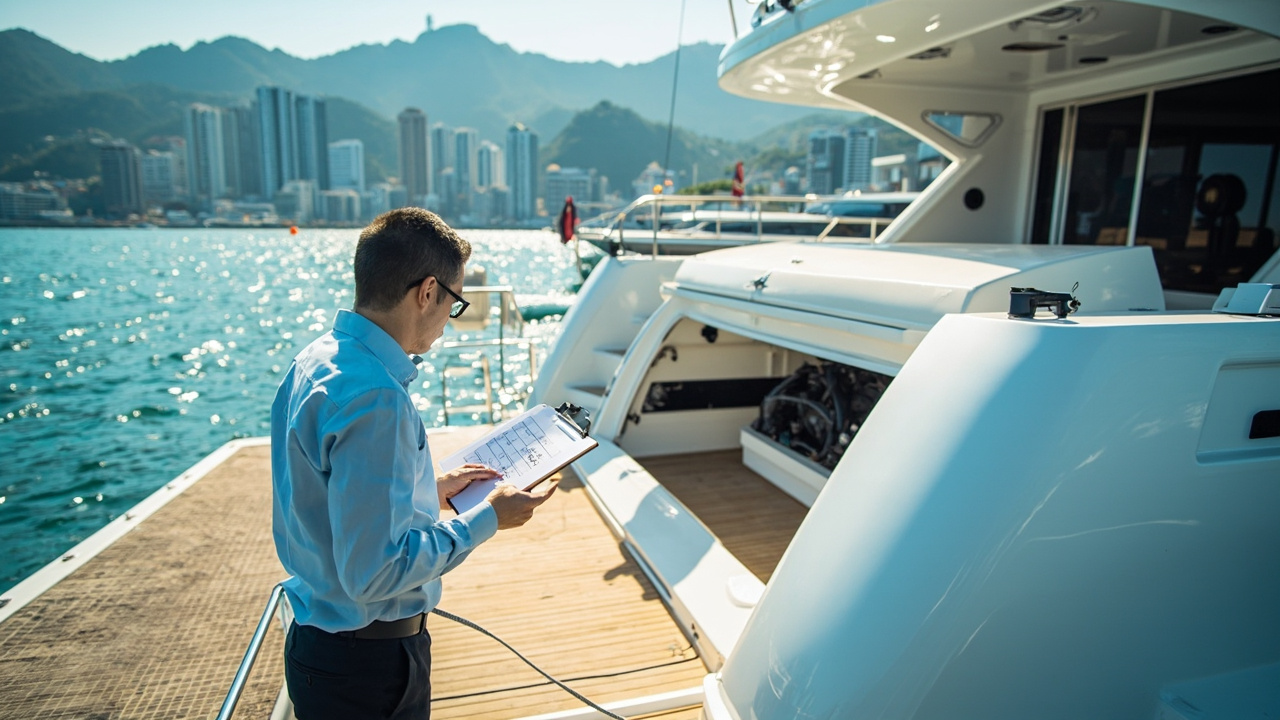

Findings that usually affect price include moisture in structural areas, evidence of grounding, ageing seacocks, soft decks, generator faults, air-conditioning failure, outdated navigation electronics and incomplete service history. Smaller cosmetic issues may be easy to accept, but defects that affect seaworthiness, insurance or near-term maintenance should be reflected in the final negotiation.
Sea trial observations are also important. Buyers should record engine temperature, smoke, vibration, steering response, trim behaviour, bilge alarms and whether the yacht reaches the expected speed under load. If the boat performs differently from the listing claims, the buyer should ask for supporting maintenance records or adjust the offer.
A practical approach is to separate survey items into three groups: urgent safety issues, near-term maintenance and cosmetic improvements. This keeps the negotiation focused and avoids arguing over every small scratch. Sellers with organised records and transparent repair history usually keep buyer confidence even when some defects are found.
Before paying the balance, buyers should confirm what will be repaired by the seller, what will be accepted as-is and whether any price adjustment replaces repair obligations. Written agreement is more reliable than informal chat, especially when handover timing, berth arrangements and insurance start dates are involved.
How to use this premium guide before making a decision
This guide is designed as a working document rather than a short blog post. Read it once for context, then use the checklist sections during viewing, document review, sea trial, negotiation and handover. The aim is to reduce avoidable risk before money, berth arrangements and insurance timing become committed.
Decision framework for Hong Kong buyers and owners
For a Hong Kong yacht decision, separate the question into four layers: actual usage, vessel condition, recurring cost and exit risk. A yacht can look attractive on listing photos but still be unsuitable if berth access is inconvenient, service evidence is weak, insurance assumptions are unclear or the likely resale audience is narrow.
Start by writing down the intended use: family weekends, business hosting, fishing, island cruising, occasional charter-style entertaining, or long idle periods at berth. The same boat can be a good fit for one pattern and a poor fit for another. Then check whether engine hours, layout, storage, air-conditioning, generator capacity and marina access support that pattern.
Buyer due-diligence checklist
| Area | What to ask for | Why it matters |
|---|---|---|
| Ownership authority | Registration details, seller authority and company documents if applicable | Confirms who can sell, sign and hand over the yacht |
| Service evidence | Invoices, dated photos, engine hours, antifouling, generator and air-conditioning work | Separates routine care from undocumented verbal claims |
| Survey and sea trial | Independent inspection, engine readings, temperature, smoke, vibration and steering notes | Turns a viewing impression into a risk list that can be negotiated |
| Cost planning | Mooring, insurance, annual servicing, haul-out, safety equipment and contingency budget | Shows whether ownership remains realistic after purchase |
| Handover | Keys, remotes, manuals, inventory, fuel level, spare parts and accepted defects | Prevents disputes after balance payment |
Risk matrix: what should affect negotiation
| Risk level | Typical finding | Suggested action |
|---|---|---|
| High | Structural moisture, major engine fault, unsafe seacock, unclear title or insurance problem | Pause, obtain written specialist advice, renegotiate or walk away |
| Medium | Ageing electronics, weak air-conditioning, generator issue, incomplete maintenance file | Estimate repair cost and agree price adjustment or seller remedy |
| Low | Cosmetic gelcoat marks, worn upholstery, dated accessories | Record in handover list; usually not a reason to derail the deal |
Hong Kong and GBA specifics to check
Hong Kong buyers should pay particular attention to berth availability, typhoon-season arrangements, insurance cruising area, yard access, lifting schedule and whether any Greater Bay Area servicing plan affects policy coverage or handover timing. If cross-border work is expected, confirm written authority, delivery responsibility, storage risk and final sea-trial arrangements before the yacht leaves Hong Kong waters.
Red flags that deserve extra caution
- Seller cannot provide consistent ownership or authority documents.
- Service history is described verbally but invoices and photos are missing.
- Survey access is restricted or sea trial is discouraged without a clear reason.
- Engine hours, listing claims and visible condition do not align.
- Handover items are vague, especially keys, tenders, electronics and accepted defects.
Negotiation and handover notes
Before paying the balance, convert every material point into writing: what the seller will repair, what the buyer accepts as-is, what price adjustment replaces a repair obligation, and when insurance, berth responsibility and possession transfer take effect. This is especially important when the yacht is being moved, serviced or stored before final handover.
Premium guide conclusion
The best yacht decision is not the cheapest listing or the most photogenic boat. It is the vessel whose records, condition, running cost and handover terms match the buyer’s real use case. If you want BoatMarket to review a listing, service file or purchase scenario, use the WhatsApp enquiry button below and include the article title “How to Assess Whether a Used Yacht’s Service Records Are Trustworthy in Hong Kong”.
How to test whether service records are genuinely trustworthy
Trustworthy service records are more than a pile of invoices. A buyer should be able to build a timeline: date, yard or technician, engine hours, photos, parts replaced, payment trail and post-repair test result. If the seller only has scattered chat images, no dates, or no explanation of who carried out the work, the records should be treated as weak evidence.
The second step is to cross-check the paperwork against the yacht itself. If antifouling was supposedly completed recently but the underwater condition, propellers or seawater intakes tell a different story, the record deserves challenge. If invoices say the air-conditioning, generator or pumps were repaired but the sea trial still shows weak cooling, abnormal noise or tripping breakers, the documents alone should not carry the decision.
The third step is to look for gaps. Hong Kong humidity, salt, typhoon-season exposure and long marina storage can age engines, seawater systems, batteries, air-conditioning and bilge equipment even when the boat is not heavily used. A multi-year gap in records should lead to deeper survey work, a sea trial and a more conservative repair budget before final negotiation.
| Record type | Stronger evidence | Red flag |
|---|---|---|
| Engines / generator | Date, engine hours, parts, technician and test result are clear | Seller only says “recently serviced” without hours or invoice |
| Antifouling / bottom work | Haul-out date, underwater photos, product used and launch date | Undated photos or underwater condition inconsistent with the record |
| Air-con / electrical systems | Fault cause, parts replaced and load or run test documented | Invoice says repaired but sea trial still shows weak cooling or trips |
| Structure / hull | Survey report, photos and repair evidence are linked | Impact, moisture or leak history without repair documentation |
Research sources and related reading
- IIMS: Things surveyors cannot find in a short inspection
- Marine Inspection: Pre-purchase inspections and maintenance records
- Motor Boat & Yachting: What to know about yacht surveys
Related BoatMarket reading:
Frequently Asked Questions
Should I rely on listing photos alone before buying a used yacht?
No. Photos are useful for screening, but buyers should cross-check survey findings, service records, sea-trial performance and written handover terms before completion.
What records are most useful for a Hong Kong yacht buyer?
Invoices, dated maintenance photos, engine hours, antifouling records, generator and air-conditioning work, sea-trial notes, survey reports and known-defect lists are the most useful.
Can incomplete service records still be acceptable?
Sometimes. The key is whether a survey and sea trial can quantify the risk, and whether repair responsibility or price adjustment is documented clearly.
How can buyers test whether service records are trustworthy?
Look for dates, engine hours, technician or yard details, parts replaced, photos and follow-up test results. Then compare the paperwork with what the survey and sea trial show.
Do survey and sea trial results replace service records?
No. They show current condition, while service records explain maintenance history. A buyer should use both to understand recurring issues and likely future costs.
What should I do if the records have gaps?
Ask for supporting invoices, recent inspection notes or technician comments. If the gap involves engines, generator, air-conditioning, hull work or electrical systems, keep a more conservative repair budget.
BoatMarket specialist follow-up
Buying, selling or listing a yacht?
Contact the BoatMarket team through the official channels below. WeChat ID and email are shown as contact details, not fake buttons.
 Scan WeChat QR Code