


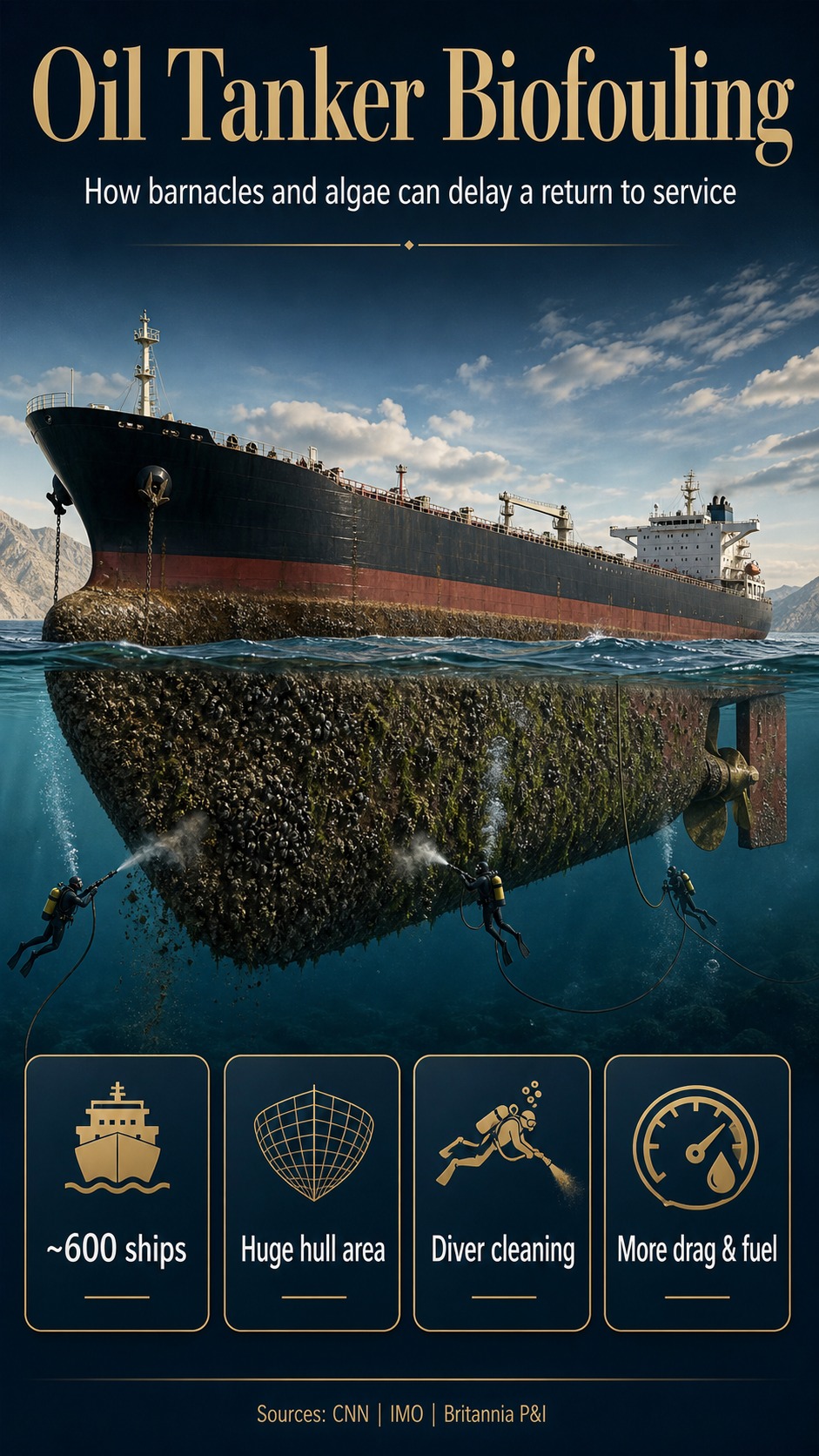
The Strait of Hormuz story is a useful reminder that a vessel can be delayed by issues below the waterline, not only by what happens on the route ahead. After long anchorage in warm waters, oil tankers and other vessels may face hull biofouling: barnacles, algae, mussels and marine growth accumulating on the hull, rudder, propeller and other submerged surfaces.
According to CNN Business, around 600 ships were waiting to transit or return to service procedures, while a large tanker hull can expose about 150,000 square feet of underwater surface. Some vessels may require diver cleaning before they can operate efficiently again.
What is hull biofouling?
Hull biofouling is the accumulation of aquatic organisms on a vessel’s underwater surfaces. The International Maritime Organization’s Biofouling Guidelines highlight that this is not only an efficiency issue. It can also affect environmental management and the movement of invasive aquatic species between regions.
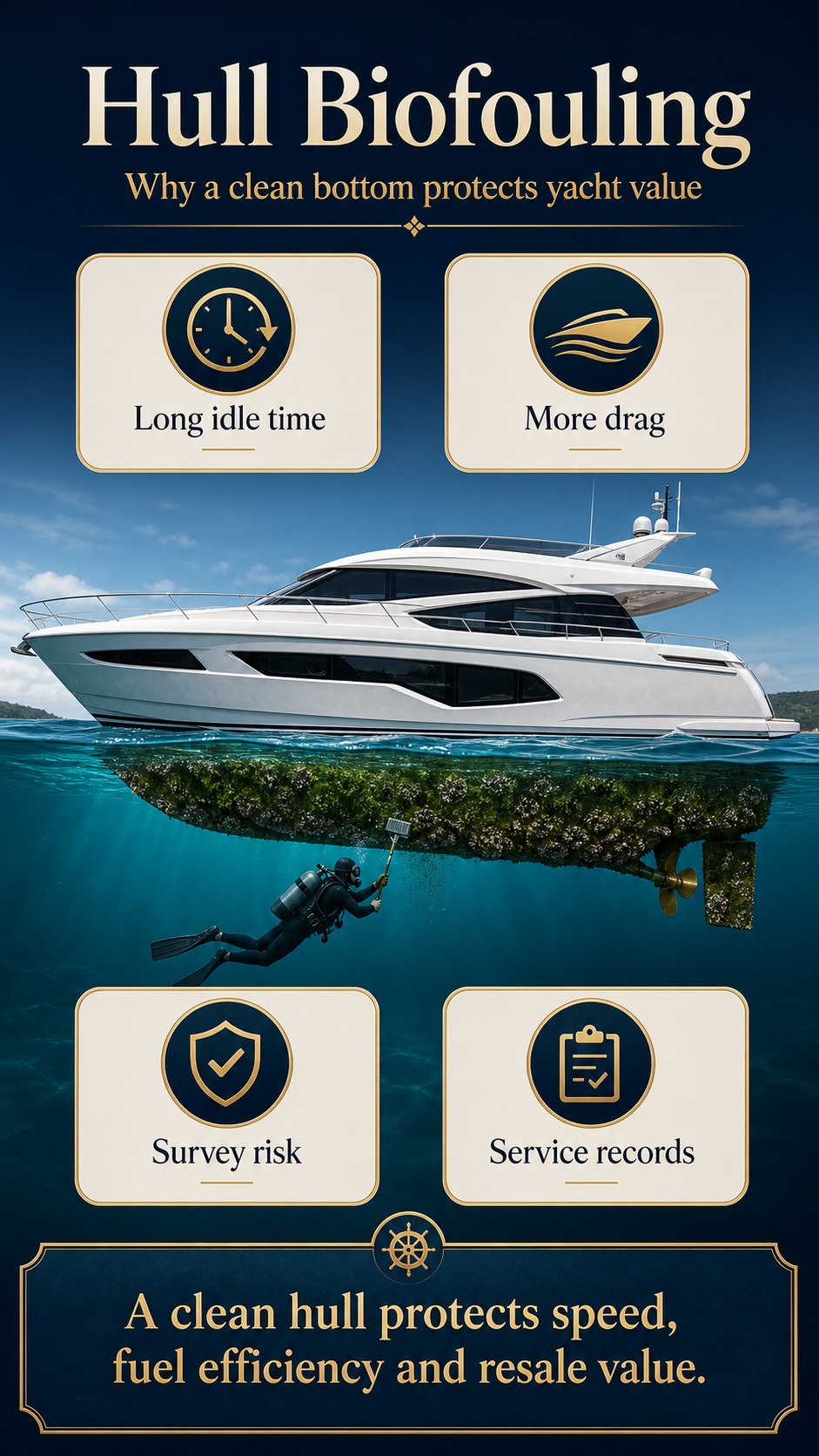
For commercial ships, fouling increases drag and can raise fuel consumption. For yacht owners, the same principle applies on a smaller but still important scale: a dirty hull affects speed, engine load, fuel efficiency, maintenance cost and second-hand resale confidence.
Why long idle time can make the problem worse
A yacht that has not been used for a while does not automatically become cheaper to maintain. When a vessel sits in warm water with little movement, marine growth can attach more easily to the hull surface. Marina conditions, water temperature, current and the age of the antifouling paint all affect how quickly this happens.
How biofouling affects a yacht
- Lower speed: A rough hull surface increases drag, so the yacht may run slower at the same engine output.
- Higher fuel use: The engine has to work harder to maintain speed, increasing fuel consumption and load.
- Reduced propeller efficiency: Growth around the propeller, rudder or seawater intake can affect propulsion, cooling and handling.
- Higher cleaning and haul-out cost: Severe fouling usually takes longer to clean and may require antifouling repair or renewal.
- Lower buyer confidence: During a pre-purchase survey, poor hull condition can lead to price adjustment, repair requests or further inspection.
Antifouling paint is not permanent protection
Antifouling paint helps slow down marine growth, but it does not last forever. Different coating systems suit different waters, usage patterns and maintenance intervals. If a yacht has been idle for too long, or if the antifouling system is near the end of its useful life, fouling can build up quickly.
Cleaning also has to be done carefully. Aggressive scraping or excessive pressure can damage the antifouling layer, making the hull more vulnerable to future growth and increasing long-term maintenance cost.
What second-hand yacht buyers should ask
- When was the most recent haul-out inspection?
- When was the last antifouling application, and what product was used?
- Are there photos of the hull, rudder, shaft seal, propeller and seawater intakes?
- Does the survey report mention blistering, seepage, cracking or corrosion?
- Was the yacht regularly moved, inspected or cleaned during long idle periods?
If a used yacht looks attractively priced but has no recent haul-out record, underwater photos or cleaning invoices, buyers should include potential cleaning, haul-out, antifouling and mechanical inspection costs in the total ownership budget.
What sellers should prepare before listing
For owners preparing to sell, hull records can improve buyer confidence. Recent haul-out photos, cleaning invoices, antifouling records, propeller and rudder inspection photos, and related maintenance receipts all help buyers assess condition more clearly. Better documentation can also reduce negotiation friction during the transaction.
Further reading
- CNN Business: 150,000 square feet of barnacles and sea gunk
- Moneycontrol: Barnacles, not bombs
- International Maritime Organization: Biofouling
- Britannia P&I: Understanding Hull Fouling
FAQ
Does a little algae mean the yacht must be hauled out immediately?
Not always. The decision depends on the level of growth, speed performance, antifouling condition and whether key components such as propellers and intakes are affected. If speed drops noticeably or fuel use rises, an underwater inspection is advisable.
How often should antifouling paint be renewed?
There is no single interval for every yacht. Water conditions, berth environment, usage pattern and coating type all matter. Owners should use service records, inspection findings and product recommendations to plan the next haul-out.
Are hull photos important when buying a used yacht?
Yes. Hull photos, haul-out records, antifouling invoices and survey reports help buyers understand how the yacht has been maintained. Clear records often support buyer confidence.
Can hull cleaning damage antifouling paint?
It can, if the wrong tools or excessive pressure are used. Cleaning should match the coating type and hull condition, ideally handled by people familiar with yacht hull maintenance.
Buying or selling a yacht?
For used yacht transactions, survey preparation, hull maintenance records or listing advice, contact the BoatMarket team.
WeChat ID: voyyacht
Email: enquiry@boatmarket.com.hk